Part I - Alain Family History
COAT OF ARMS REPORT
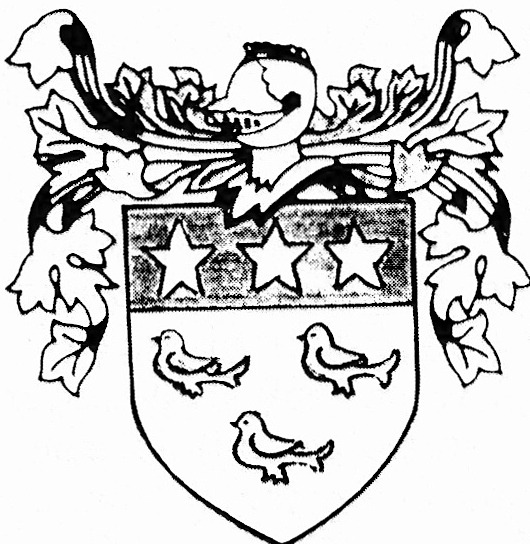
The Coat of Arms was completed by a heraldic artist, from information that was researched in:
Riestaps Armorial General - Normandy, France.
The Coat of Arms (shield) is described heraldically as:
Argent, three martlets gules, on a chief azure, three mullets or...
Martlets are short legged birds of fast movement. Believed to have been a symbol of a religious man who went to the Holy Lands.
Mullets - Star shaped, said to represent rowels of a spur.
The crest is the small decoration which appears above the shield and helmet:
None recorded.
Family mottoes may refer to family exploits or past family history, others refer to the shield, crest or badge device and others are a play upon the name of the holders, started in the distant past as battle cries. The motto for this name is:
None recorded.
Names for individuals originated as a way of identification and they usually fall into four categories (see supplement sheet). Dictionaries of surnames indicates surnames may have different spellings from the original.
Allain.
The individual meanings for some names are obscure, but for others it is self explanatory and understandable.
Medieval Coats of Arms (Saskatoon)
Market Mall S7J 2G2
History of ALAIN Name
ALLAIN - variation of the name D’ALAIN
ALAIN - first name and family name.
The following definitions are given:
1. The name of many saints; Latin “Alanus”
2. Also, the name of an ethnic people - from the south of Russia in ancient times.
(The above research was carried out by Jean-nine Alain in France.)
Further definitions:
3. In Father Lebel’s story on Simon ALLAIN he says, “ALLAIN signifie d’un blanc harmonieux comme le blanc onctueux de certaines faiances authentiques de Rouen.” [Allain means of a smooth white, such as that of authentic pottery from Rouen (a region in France known for its excellent pottery, among other things).]
The name ALLAIN has a number of meanings. According to the book, The Origin of English Surnames by P.H. Reaney, Routledge and Kegan Paul, London 1967, the French word ALLAIN is the name of a Welsh and Breton saint.
* * * * * *
The following has been taken from The Meaning of Your Name written by Mary Rattray, a leaflet enclosed with the Coat of Arms Report on Alain, obtained from Medieval Coat of Arms (Saskatoon) with Head Office in Vancouver, B.C.
Surnames, generally, can be divided into four categories:
1. Place Names which would denote the location from which a person’s name came.
2. Occupational Names which pertain to office, rank or trade.
3. Descriptive Names which describe physical characteristics, or relationships, such as condition in life appearance, dress and colouring.
4. Kinship Names which are derived from the name of the name of the father. The patronymical surname is common in many forms to all countries, thus in England the son of John became Johnson.
INTRODUCTION
The history of Canada and the arrival of the Allain family were interwoven. The explorer, Samuel de Champlain, who is known as the Father of New France, founded Quebec City in 1608 and nine years later in 1617 the French Colonists began to arrive in Quebec. Upon his arrival back home in France, Samuel reported on the rich possibilities that this new land had to offer. He convinced the authorities that, before the fur trade could be built up, permanent settlements would have to be established as the only inhabitants were the Indians. Once the word spread of the opportunities in the new land, it did not take long before men were booking their passage on ships which left early in the spring. Spring was the best time to begin as it allowed ample time to return home to France before freeze up. There were many men and women willing to undertake this challenge of venturing into the unknown.
According to statistics from M. Emile Vaillancourt's book, La Conquete du Canada Par Les Normands, there were 800 families from Normandy, France, that crossed the Atlantic. These families had 5,011 children, an average of 6.26 children per family. It was a surprise to find among the hundreds of names listed those of our ancestors Allain, Lessart, Leclerc, L'Heureux and Deschamps, to name a few.
Several Allains came from France to reside in Canada. There was a Charles Louis Allain, Armand Alain, as well as a Louis Alain according to the 1667 census. However, the one we are most interested in is SIMON ALLAIN.
SIMON ALLAIN
(This story was originally written in French by Rev. Gérard Lebel and later translated into English by Muriel Turcotte.)
Simon Allain was a native of Saint Sauveur parish of Rouen, France. Rouen was a city of 120,000 people and one of the nicest cities in Europe. It was also the former capital of Normandy - a province of France. It was known for its famous people - one of them being Cavalier de la Salle - and also, it is here where Simon Allain was born.
Simon Allain, the son of André and Catherine Marc, was baptized on August 18, 1643. Simon was a good scholar while growing up in the city of Rouen.
As a young man he dreamed of adventure and going to America, even though it was the other side of the Atlantic. This adventurous man decided in 1664 to work on a French Canadian colony for a three year term.
The first written proof of his arrival in New France was on the occasion of his being confirmed by Bishop Laval, Notre Dame de Quebec Church, on July 25, 1665, a Saturday on the feast day of St. Jacques. He worked for Jean Chesnier, a carpenter and the proprietor of quite a large farm of which 10 arpents (one arpent is a measurement of land equal to 1½ acres) were in cultivation near Sillery.
Effective April 8, 1668, a contract was written out by Leconte having Simon declared the owner of a farm of 2 arpents, but this was strange as Simon had been the owner of this land since 1667. Slowly, but surely, Simon planned his future and on the 24 of August, 1669, he acquires (probably through some sort of rental) 60 arpents of land. Sixteen arpents belonging to the seigneurie of Gaudarville between Sillery and Cap-Rouge.
It was March 9, 1670 that Simon at the age of 27 was united to Jeanne Maufay (alternate spelling Maufait) in a civil ceremony. Their marriage was eventually blessed on April 15, 1670 by R.P. Joseph Chaumonot S.J. in the chapel of Notre Dame de Foy after the banns were published on the 7, 8 and 9 of April in Notre Dame de Quebec Church. Jean Nau and Hubert Simon assisted as witnesses.
Jeanne was the daughter of Pierre and Marie Duval. She was born June 10, 1656 and baptized on the 24th of June, 1656, the feast day of St. Jean for whom she was named after.
Jeanne's parents offered to board the young couple for the first year if they were willing to remain there -- otherwise, if Simon and Jeanne preferred to live on their own property, they would provide them with the necessary vitals. Either way, after one year, Jeanne was to receive a cow, a pig, etc. The Maufait family helped the son-in-law to build a stone dwelling 20 x 16 feet on his land of Gaudarville.
In August of the same year, Simon resold his concession of Gaudarville to Ignace Bonhomme. The new owner in paying "the 129 pounds in labour" meant that he would clear some property belonging to Simon Allain on Cote St. Paul in the winter. He also promised to clear another arpent, which is close by, in 1672. The notary, P. Duquet, states on the 17th of August, 1670, that Simon's property extends 9 to 10 arpents long. By June 11, 1673, all the conditions of the contract had been fulfilled to the satisfacton of both parties.
After selling the land Jeanne and Simon no
longer had a residence of their own. Simon had in his mind to settle close to his in-laws. Could it be that it might bring him closer, to end up with the stone house? On January 15, 1671, Father Henry Nouvel S.J., through the name of the congrega-tion, grants Simon Allain the rights to 2 arpents in front, 30 in depth -- approximately 60 square arpents of land at Sillery. Simon paid 3 pounds a year with the condition that he and his wife would live on this land -- and so it seems they did until 1677. Their eldest son was baptized at Sillery on December 26, 1674.
The Allains were friendly with the Jesuits. We believe this is what attracted them to Lorette, a small parish founded in 1673 by Father Chau-monot, which had 146 people living in 18 small huts in 1681. Different writings indicate that the Allains lived where the Hurons raised their tents for some thirty years.
By September 1681, Simon Allain purchased from a settler of Lorette -- a cow, a bull, two pigs and the wheat crop for 100 pounds. According to the census that year, the Allain family was situ-ated at Petite Auvergne, seigneurie Notre Dame des Anges. Simon owned one gun, four animals and fifteen arpents of land under cultivation.
In 1682 Simon signed a favorable agreement in which he promised to clear 4 arpents of land and have it ready for seed before August 15 and, for all this work, he was to receive only 20 bushels of wheat from Mathieu Gué. Simon had signed the documents.
By September of this same year Simon felt the squeeze and went to the notary's office accom-panied by his father-in-law, Maufait. Simon swallowed his pride and asked for the 75 pounds that would have eventually been his wife's inheri-tance. His wife is bedridden at this time. Pierre Maufait (the father-in-law) "bled himself white" to clear his son-in-law.
This episode must have hurt Simon's pride very much. This may be the reason for the twelve, rather secluded, years of his remaining life.
There is no proof of the time of his death but one thing is certain; by 1694 he had died because there is proof that his wife Jeanne, now a widow, was living in Lorette and married Jean Poitras, a young whipper-snapper of 24 years, in 1694. He promised he would put in 300 pounds towards the new community. Jeanne, in return, promises to take stock of whatever she owns, and we con-clude that they were married on June 6, 1694 in Notre Dame of Lorette even though there is nothing to prove it.
Jeanne passed away in 1742; it is believed she was 86 years old but the church records indicate that on February 11, 1742, Marie Jeanne was buried after receiving the last sacraments at the age of 92 or so!
The Allain couple had 5 children, 2 girls and 3 boys. Pierre and his wife had 11 children. Noel Simon and his wife had 14 children while Catherine had 10 children. There is no informa-tion on Jeanne and Nicolet.
The church records contain many Allain mar-riages and deaths. Approximately 300 marriages from the beginning to the present time and the family is still growing.
Father Lebel noted in conversation with us that he discovered Simon Allain was not a promi-nent citizen; however, he had a love of God.
FROM SIMON ALLAIN TO HENRI ALAIN
Although Simon Allain emigrated to Canada in 1664, little is known of the generations that followed, other than the direct lineage (see Alain Genealogy). However, we know the family increased as there were many "Alains" recorded in the Canadian census returns for Quebec. We also found that the family never moved too far away from the site of their original roots in Quebec.
From Simon we move to our sixth generation: Jacques Alain who was born in Quebec on November 28, 1820 and later married Angele Leclerc on February 7, 1842 at Notre Dame de Quebec.
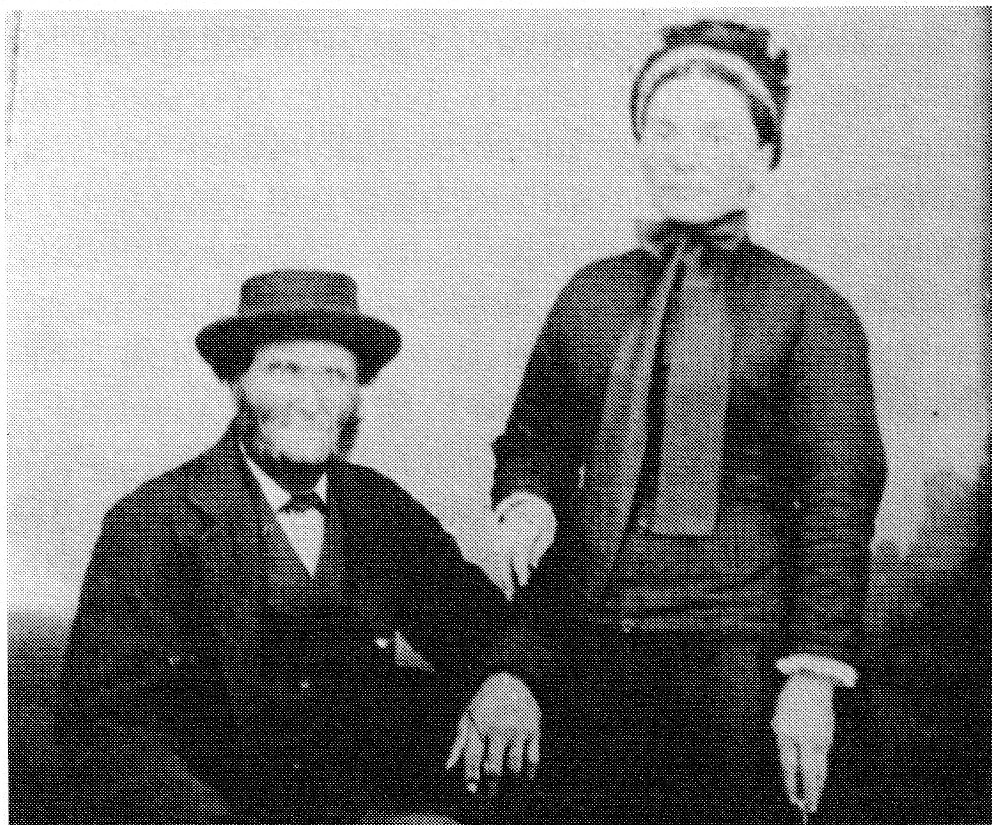
According to the Canadian census of 1861, Jacques Alain's family was recorded as being: Jacques 45; Angele 38; their children Jacques 18, Henri 15, Delina 14, Louise 12, Marie 9, Edouard 8, Theodore 5, Joseph 3, and Ferdinand 1. Eventually the family consisted of 18 children, of which 5 died in early childhood. Their second son, Henri, is the one we are interested in.
The family was living on a small farm that consisted of one lot (a parcel of land approximately 34 acres) of which 20 acres was forest and 14 acres was in cultivation. Land value was determined by the kind of wood standing - redwood, grey, white - and by the size of it as well. Jacques' small property was valued at $500.00 while his machinery was valued at $1.50. It was also interesting to find that 4 acres produced 50 bushels of oats while a half acre netted them 50 bushels of potatoes. It must have been a good year for hay as they recorded 400 bundles - each weighing 16 pounds.
In the census returns of 1871, the family is much smaller, no doubt because the older children have already established homes of their own. Among them was Henri. Jacques' farm has grown in size to 300 acres, and he now owns plows, cultivators, carriages, a sleigh and a number of wagons. They also own a threshing machine and a fanning mill. As he owns more than one plow and a cultivator, one wonders if the older boys were farming with Jacques as well. However, the census does not mention this.
There is no record of Jacques' death but we know that Angele died at St. Raymond, Quebec, on September 22, 1917 at the age of 95, which must prove that hard work and a large family never hurt her.
A short distance away, near the village of St. Casimir, the Folley family lived. In 1871 this Irish family records for the census the value of their farm at $1,600.00 and machinery at $60.00. It is here we find Arthemize living with her parents: Daniel 48; Celina 42; and brothers and sisters, Heraclize 19, Stephanie 17, (Arthemize 15), Philias 12, Cezarise 10, Bruno 8, Henry 5, Virginie 2, and Herman 1. [Ed.'s Note: Information was taken from Quebec Census returns. Note difference in spellings of names.]
One presumes the Folley and Allain families knew each other as they lived in the same locale and, within a few years, two Folley girls married two of Jacques Allain's sons. It is recorded that his eldest son Jacques, after his first wife died, married Heraclize on January 12, 1885. However, some ten years earlier, Henri had married Arthemize Folley on July 27, 1875, in St. Casimir, following the publication of the three marriage banns. The church records contain the following: "Henri Allain, farmer with his own homestead at St. Ubald and being of legal age, married the underage daughter of Daniel Folley and Celina Leboeuf of St. Casimir. The young couple received the nuptial blessing in the presence of the witnesses which were both fathers of the bride and groom along with Edouard Allain, the groom's brother. They all signed as the bridal couple could not write."
It is presumed Henri took his bride to his homestead which was approximately one mile from the village of St. Ubald and which happened to be across the road from his brother Jacques. Both raised their families here.
The month of January in 1890 was a time of sadness for the Allain family, as it was on the fourth day that Henri died at the young age of 43. Many relatives and friends attended Henri's funeral, a sign of respect and love for the man who had fathered eight children. The children born of this union with Arthemize Folley were Marie, Cezarise, Alphonse, Henri, Alfred, Bruno, Odelie, and Edouard. The baptismal records list all the boys names beginning with Joseph (e.g. Joseph Henri) and the girls with Marie. It must have been hard on this young woman of 34 years with eight small children depending on her for their survival. With the co-operation of all members of the family, they managed. When the boys were old enough they left home to work in the bush. And so it was that Henri, not being able to speak a word of English, left at the age of 14. He worked in a number of lumber camps in Quebec, Ontario, and in Duluth, Minnesota, U.S.A., before heading west with his older brother Alphonse.
For Arthemize it must have been heartbreaking to say farewell to four of her sons - Henri, Alphonse, Bruno and Edouard. Each in turn left home and ventured west into the unknown. She never came West although she made plans to visit Henri and his wife, Alma, who lived in the North Battleford area close to Alphonse and his wife, Josephine, who was also Alma's sister.
Bruno came out in 1905 and settled in the Paradise Hill area where he farmed (his story is found in this book). Henri's oldest son related the following information about another of Henri's brothers: "Uncle Edouard was a plasterer and lived in Detroit and Los Angeles. He
never married and years later, following his death, a letter was sent from a lawyer to Henri who was then living in Veillardville, notifying him that the lawyer wished to settle Edouard's estate. Sometime later Henri and his brothers each received their share."
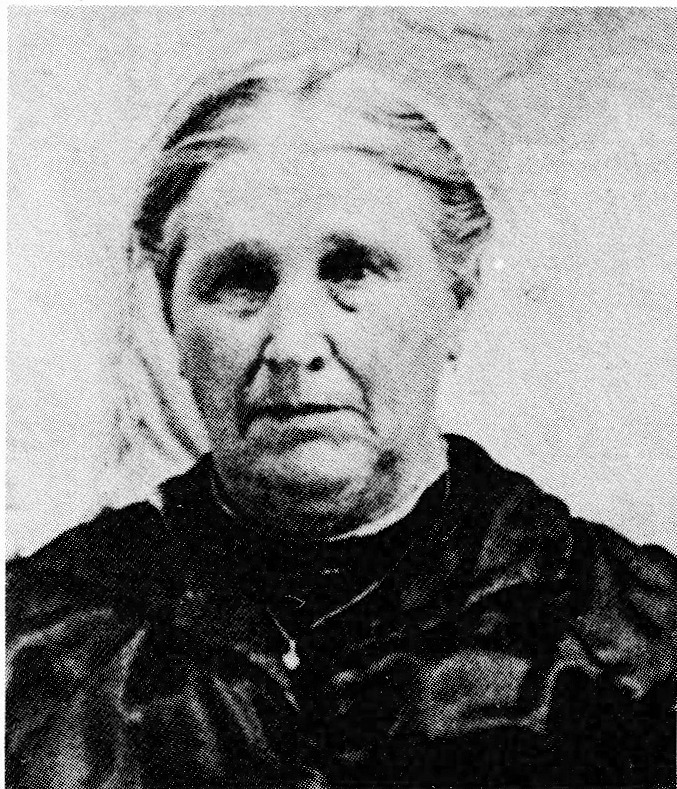
We know Arthemize married three times in all. The first to Henri Allain, the second time to Nazaire Fugere on September 26, 1892, and on August 13, 1904 she married a third time - to Alfred Denis who was a twin. According to Cecile Gingras, a great niece of Arthemize, Alfred is remembered for singing in the church choir for some 50 years.
Following Alfred's death, Arthemize moved into St. Ubald where she lived close to the church. Cecile remembers her as being a jolly, good-living woman who loved having company. Many a time her family would stop at Arthemize's place for a short visit on their way to church. She always had biscuits and good candy which she passed to them. Cecile was 14 years old when Arthemize died and at that age one remembers certain things quite vividly. She remembers it being said that Arthemize died suddenly January 9, 1921, at night, after having eaten lunch during the evening with her friends. She was nearly 65 years old.
Cecile shares this old family recipe with us. It was written in French and the translation goes like this:
Salted Lard Cake
1 lb. lard - salted and mashed
1 pint water
Boil together 5 minutes.
Method
4 eggs, beaten
2 cups sugar
1 cup molasses
Mix 4 to 5 cups flour and 5 tsp. baking powder, 3 tsp. spices to suit your own taste. Mix all together with 1 lb. raisins and 1 pkg. of red and green cherries. Bake at 325° F. 2 hours or more.
ST. UBALD
submitted by Marlyne (Alain) Reindl
The information on St. Ubald, Quebec, was obtained from two books written on the occasion of the 100th anniversary of St. Ubald in 1971 as well as from the newspaper, The Portneuf-Press, November 25, 1971.
St. Ubald is a small village about twenty miles north of the St. Lawrence River and situated on Highway 363. When approaching this quiet town, one is immediately drawn to the church spire which towers over the tree tops. It was in this area that Simon Allain settled.
When Simon Allain settled in the Lorette area of Quebec, he could not have envisioned his family's contribution to the development of Quebec. One of his descendants, Jacques Alain, was a church trustee while other Alains were known as "cultivateurs". These men and women devoted themselves to building a new life for their families by clearing and making use of the forest; they plowed the land, built houses, and before long, villages and towns had sprung up. They established schools, built churches and, in these and many other ways, they developed a region unique to that part of Quebec. That was progress; however, back then in the 1600s, progress came slowly.
Life was difficult for the colonists of St. Ubald, but no one complained though others may have laughed at them wearing moccasins on their feet and pack sacks on their backs. They lived in cabins made of rough wood which were way out in the forest where there were no roads, just trails and lots of flies. It was true, they were not rich and most would admit, "Nous etaient casses comme des clous" (poor and broke as nails). According to Jules St. Germain, cultivateur-colonist, living in 1800 in St. Ubald, "These people were happy in their misery and were young, full of health, and most encouraging in helping their family and friends. Everyone did their best and were ambitious, stimulated by the
love of the land. Each one worked bit by bit and slowly the colony was organized."
The colonist families of this area attended church at St. Casimir which was a short distance away, but back then the journey probably took the better part of a day following the trail through the bush.
In 1865 the population of St. Ubald totalled 60 families and, with the numbers growing, it is understandable why the people chose to petition to have a church of their own. Rev. Belanger, priest at St. Casimir, enquired about the advantages and disadvantages of separating from St. Casimir. In 1866 a church decree was signed, giving them permission to separate, although it continued to be a mission of St. Casimir until 1871, when they acquired their first resident priest, Father Chevrotiere. He remained at St. Ubald until 1886. During this period of time a chapel was erected. The size indicated they had definitely built for the future as it was 45 by 36 feet. It served the area until 1881 when a new church was built. The chapel then became a rectory. Three hundred and seventy-eight baptisms were recorded between 1871 and 1880.
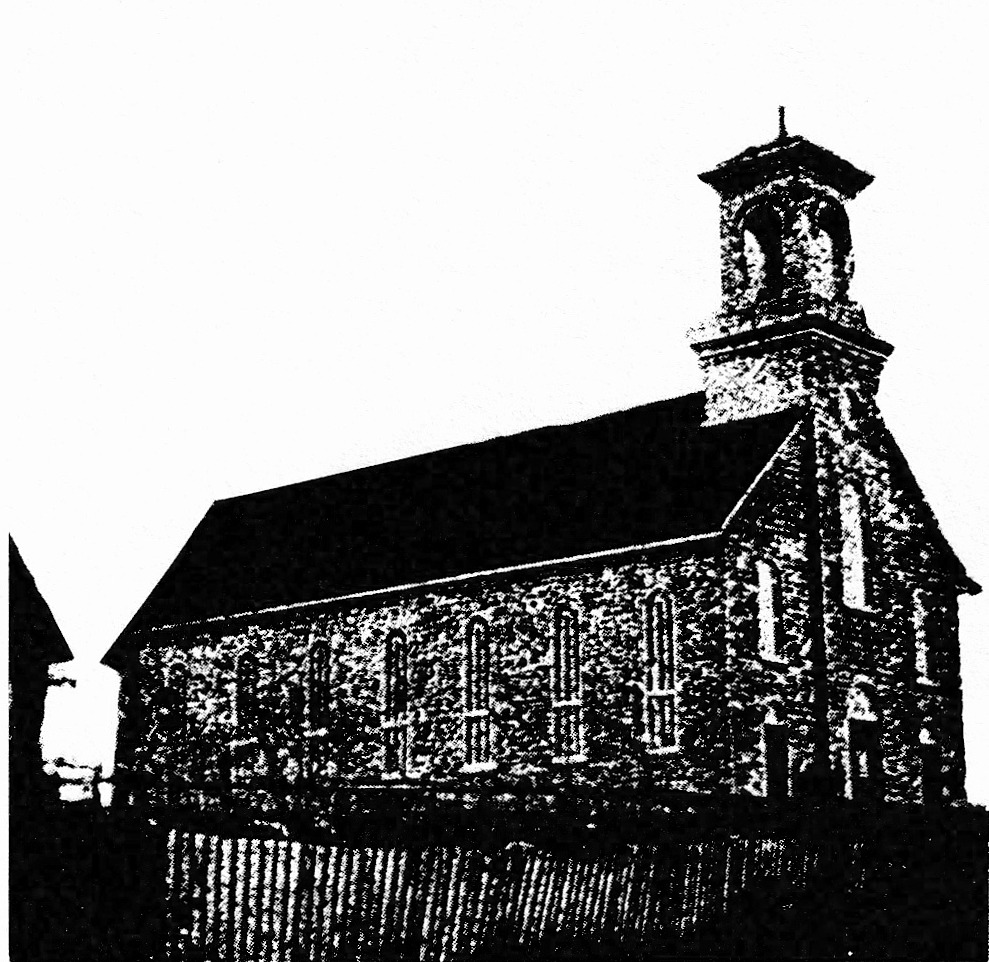
It was difficult to set up schools in the bush, but the settlers were determined their children would be educated. The farmers pooled their resources and built a number of small buildings. These buildings were spread throughout the area yet close to the settlers. To assist with the operation of these schools, a school board was organized. The first meeting took place in 1878.
Life among the pioneers of St. Ubald resembled that of any other colony in early days but was vastly different from our lifestyle of today in the 1980s:
- - it was unheard of for a young couple, who was courting, to be left alone even for a few minutes. Whether they were quietly sitting in the parlour or enjoying a buggy ride along the concession, there was always a third person present.
- - many men, young and the very young (some under the age of 15), left home in the fall to work in the bush. There they remained till spring to work as lumberjacks. This meant loneliness for them as well as for those left at home.
- - witnesses at weddings were often male relatives or friends. There seemed to be no question of a matron of honour or bridesmaids.
- - dancing was strictly forbidden. Other forms of entertainment were singing and story telling.
- - many colonists could neither read nor write. In fact, many could not sign their names, yet they were able to make legal papers or contracts.
- - families remained close to each other.
The census of St. Ubald in 1976 noted a population of 1,521. The main occupations were farming and dairy. If Simon Allain were with us today, I believe he would be pleasantly surprised by the vast improvement.